The world’s first online Studiolo

During the Renaissance, a studiolo was a private room dedicated to study, reflection, and discovery. Part library, part sanctuary, part cabinet of curiosities, it was a space where collectors, thinkers, artists, and patrons surrounded themselves with objects, books, and images that helped them better understand the world.

Studiolo reimagines that idea for the digital age.

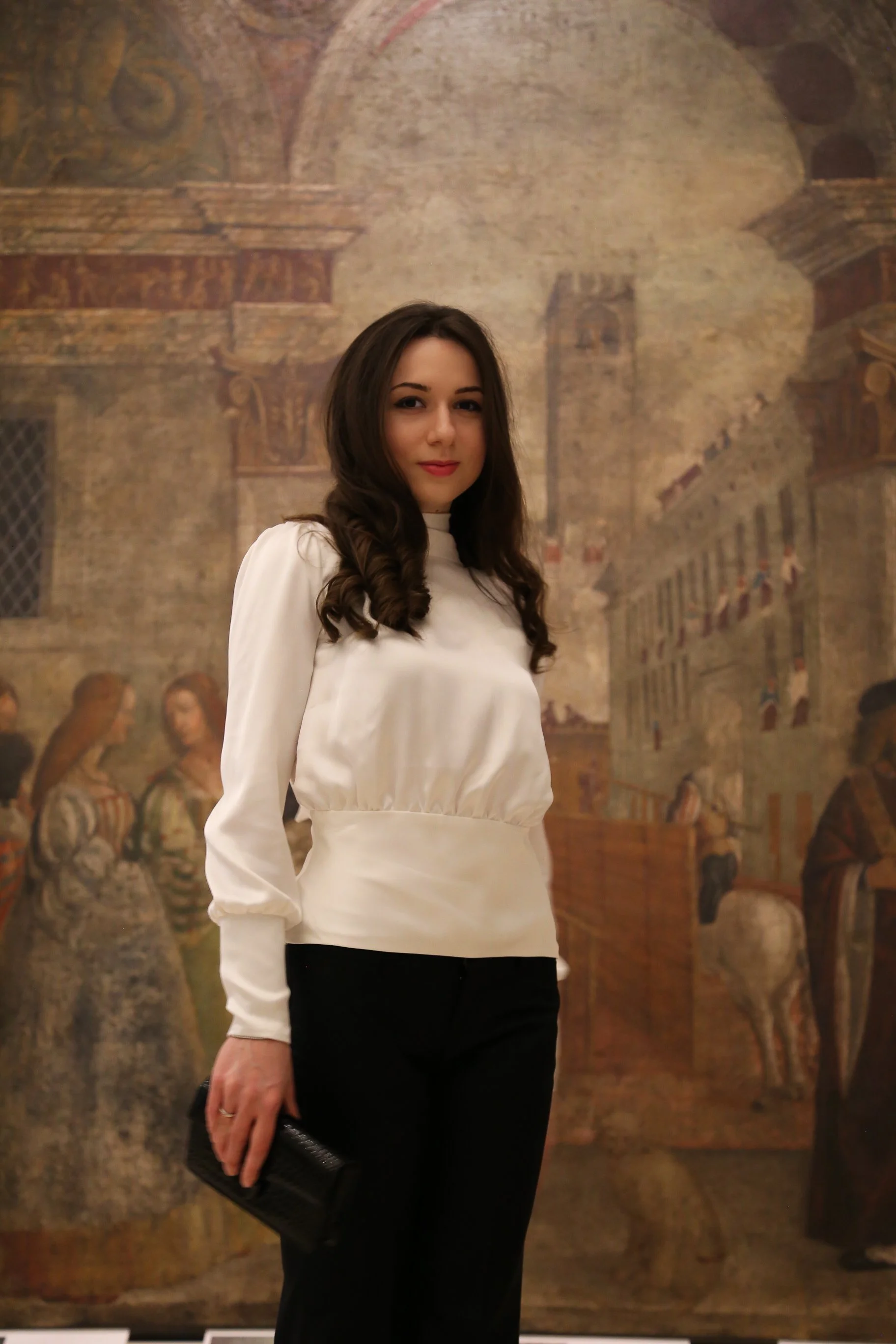
A woman with long dark hair wearing a white blouse and black pants holding a black clutch bag, standing in front of a large historical mural depicting ancient architecture and figures.

Founded by art historian and writer Maya Stoilova, MA, Studiolo is an online platform dedicated to exploring art and its histories through carefully researched courses, books, and articles. Drawing on years of experience across academic research, writing, provenance research, cataloguing, museums, and commercial galleries, its aim is not simply to provide information, but to cultivate visual literacy and change the way people look at art altogether.

Too often, art history is presented as something distant or inaccessible: a subject confined to textbooks, institutions, or academic language. Yet the greatest gift an art history education can offer is much simpler than that. It is the ability to stand before an artwork and understand how it works: how composition guides the eye, how colour directs emotion, how symbols communicate ideas, and how images reflect the societies that produced them.

Studiolo was created to share that way of looking.

The platform brings together close visual analysis, historical context, and cultural interpretation in a form designed to be rigorous yet accessible. Whether examining Renaissance patronage, nineteenth-century modernity, or contemporary visual culture, the focus remains the same: learning how to read images carefully, confidently, and with curiosity.

The courses are designed for collectors seeking sharper judgment, students seeking knowledge beyond the classroom, artists searching for new ideas, travellers wanting richer encounters with museums, and readers who simply wish to engage more deeply with culture and visual life. Each course is carefully structured and self-paced, combining lectures, close readings of artworks, and broader historical frameworks. Rather than overwhelming learners with terminology, Studiolo prioritises visual understanding: teaching not only what to know about art, but how to look at it.

Because once you learn how to look, paintings, buildings, films, photographs, advertisements, and museums begin to reveal themselves differently. Art history stops being something distant and becomes part of everyday life.

Welcome to Studiolo.